About
Still figuring things out.
A little better
than I used to be.
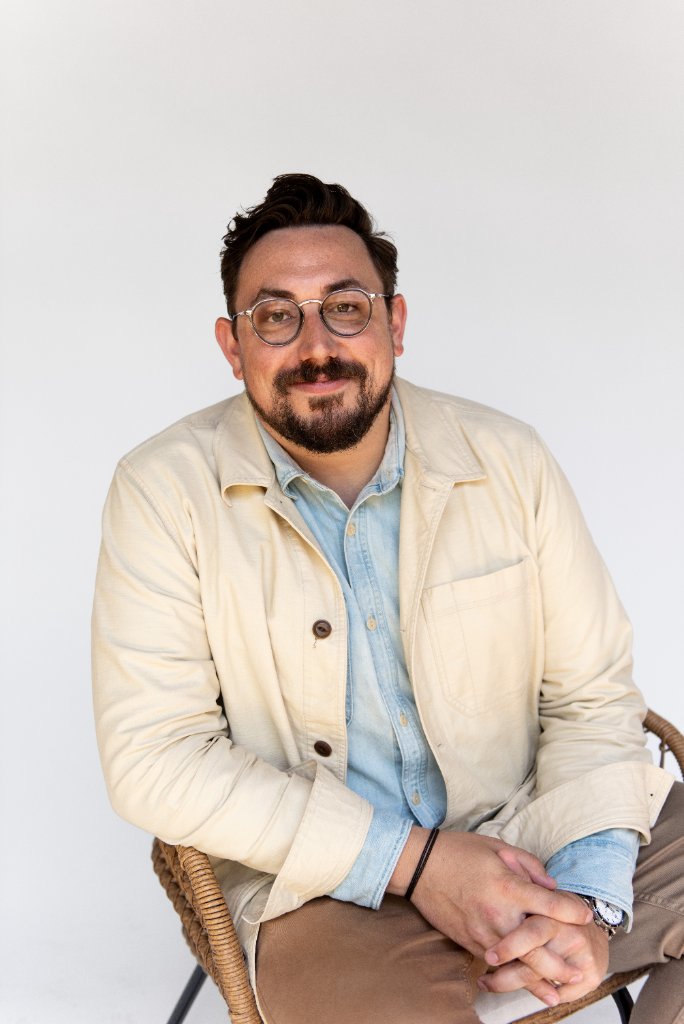
I'm a commercial and operating executive based in Grand Rapids, Michigan. I've been in this work long enough to have real opinions — and to have been wrong about enough things that I hold those opinions with some humility. This is a record of the work, the thinking, and what I've tried to learn from both.
Outside of work, I'm a husband, a father, and someone who still finds most things genuinely interesting. That curiosity informs how I see business, leadership, and the kind of person I'm trying to become.
What People Call On Me For
Making commercial systems actually work.
Not just setting a revenue target. Building the channel architecture, team structure, and operating rhythm that produces the number reliably — and holds together when things get complicated.
Operating across the full picture.
Revenue strategy, go-to-market, channel development, operations, product commercialization, cross-functional execution — often at the same time. I've had to be useful across all of it.
Holding growth and operations together.
I've been in rooms where top-line ambition and operational reality were in direct conflict. Navigating that tension without losing either side is something I've learned — slowly, through experience.
Bringing judgment, not just frameworks.
Pattern recognition from working across industries, stages, and ownership structures. What matters, what doesn't, and what to do next — that kind of judgment accumulates over time.
In My Own Words
I've spent my career building and leading commercial organizations — across consumer brands, optical, e-commerce, and SaaS. I've owned revenue targets, built teams from scratch, and worked through the kinds of problems that don't resolve neatly on a slide: supply constraints, channel conflicts, organizational transitions, market shifts.
The range has been useful. DTC and wholesale. Product commercialization and national distribution. Subscription growth and customer experience. Working with founders and PE-backed management teams. I've learned different things in each environment, and I try to carry all of it.
"I grew up in the Midwest. I care about doing things well, being honest with people, and building things that last."
I'm a better leader than I was ten years ago. I expect I'll say the same thing ten years from now.
Career Arc
Most Recent
CRO — Omnichannel Consumer Brand
My current chapter. Leading a consumer brand across revenue, marketing, operations, and product commercialization. The role spans DTC, wholesale, key accounts, and customer experience — while staying close to supply chain and production realities. It requires more range than anything I've done before.
Lead commercial strategy across DTC, wholesale, specialty retail, and key account channels
Oversee sales, marketing, customer experience, and the operating areas tied to commercial performance
Led brand licensing, new product programs, and category expansion alongside the core business
Navigated channel complexity, brand integrity, and profitability across a multi-brand environment
What I Took From It
This role has asked more of me than any previous one — not just the top-line work, but holding the full system together simultaneously. I'm still learning from it.
Prior
Growth Leadership — SaaS & Subscription
Before my consumer chapter, I led growth at HuntWise (Sportsman Tracker), an early-stage SaaS and subscription business, during a period of rapid expansion — scaling it from early traction into a multi-million-dollar subscription company before its acquisition by Kalkomey. It was my first real education in what efficient growth actually looks like — and how quickly things can go sideways when you grow ahead of your understanding of the customer.
Helped scale the business from early traction to a large and active user base
Drove growth through paid acquisition, differentiated positioning, and seasonal demand alignment
Improved monetization through premium subscription strategy and revenue quality work
Built growth systems grounded in customer insight and efficient acquisition
Worked closely with founders on go-to-market decisions and commercial priorities
Supported the business through a PE-backed acquisition
What I Took From It
This chapter gave me a first-principles view of growth. Real scale comes from timing, clarity, and knowing exactly why a customer chooses you — and those things are harder to build than they look.
Foundational
Commercial Foundations — Consumer Brands
Early in my career, I built the commercial foundation that still shapes how I lead. Working across consumer businesses and retail environments, I learned the unglamorous side of distribution, account management, channel economics, and the follow-through required to grow in the real world.
Built fluency in national account management, retailer relationships, sell-in, and replenishment
Learned how forecasting, margin structure, merchandising, and operational follow-through connect
Worked in consumer brand environments where success depended on both strategy and discipline
Developed a practical understanding of how distribution is earned, supported, and expanded
Gained an early appreciation for what partner trust and consistent execution actually require
What I Took From It
This is where I learned that growth is earned. Distribution, partner relationships, and repeat performance don't come from strategy decks. They come from showing up, doing what you said, and building trust over time.
Things I Keep Seeing
These observations come from operating across enough businesses and situations to recognize the same dynamics playing out in different environments. None of them are original. They just keep being true.
Most revenue problems are actually organizational design problems.
When revenue stalls, the instinct is to change the strategy, hire a new salesperson, or launch a new channel. More often, the issue is misaligned incentives, unclear ownership, or a team structure built for a smaller version of the business. I've made this mistake myself.
Companies often scale the wrong thing first.
Headcount before systems. Distribution before demand. Brand before product-market clarity. The sequence matters enormously, and the cost of getting it wrong compounds quickly. This one is hard to see when you're inside it.
Channel conflict is almost always avoidable.
Most channel friction is a pricing, positioning, or communication problem that was allowed to persist. A clear channel strategy with defined lanes, transparent policies, and enforced structure prevents most of it. The hard part is making those decisions early, before the conflict creates stakeholders.
Technology creates leverage for people who already know what good looks like.
The businesses getting the most out of modern tooling are the ones that already had strong commercial and operational judgment. Technology amplifies clarity — it doesn't substitute for it. I've seen both sides of that equation.
Growth and profitability are only in tension if you let them be.
The commercial leaders who last are the ones who understand both sides of the P&L. Revenue discipline and margin awareness are not opposites — the tension between them is usually a sign of unclear strategy, not an inherent tradeoff.
How I Think About Things
These are not prescriptions. They are things I've come to believe from operating in environments where being wrong had real consequences.
Strategy has to survive contact with reality.
The plan matters less than the ability to adapt it. Most strategic failure is an execution problem in disguise. Closing the gap between what gets decided in a room and what actually happens in the field — that is where the real work is.
Revenue is a system, not a number.
The number is always a lagging indicator. What creates it — channel design, team structure, incentive alignment, commercial rhythm — is what you're actually responsible for building. I've seen good people chase the number and miss the system. It rarely ends well.
Growth without grounding is expensive.
Top-line momentum that outpaces operational reality creates more problems than it solves. The best commercial leaders I've known understood profitability, not just revenue. The tension between the two is where judgment gets built.
Technology amplifies what's already there.
I've seen modern tooling used well and used badly. When it's applied to something solid, it creates real leverage. When it's applied to a weak foundation, it just accelerates the wrong things. The foundation always matters more than the tools.
At the executive level, range matters.
The most consequential work I've done required holding multiple things at once — revenue and operations, sales and product, brand and distribution. The ability to move across those systems without losing coherence is something I've tried hard to develop.
Leadership is mostly about clarity.
Not certainty — there is rarely certainty. But clarity about direction, priorities, and what's actually expected. People do better work when they understand what matters and why. Creating that environment is one of the most important things a leader can do.
Where I Tend to Help Most
Not every situation is the right fit. The ones where I'm most useful share some common characteristics — and I'd rather be honest about that upfront.
Growth-stage businesses at a commercial inflection.
Companies that have found something real and now need to build the commercial infrastructure to scale it — without breaking what made them work in the first place. This is probably the situation I understand best.
PE-backed businesses where organic growth has stalled.
Investor-backed businesses where the go-to-market needs to be rethought for a new stage of ownership and expectation. I've been inside those conversations. I understand what the pressure looks like from both sides.
Founder-led businesses carrying commercial strategy personally.
Founders who have been doing everything themselves and need a partner who can build the operating layer that turns founder effort into something more repeatable. I have a lot of respect for what that transition requires.
Boards that want operator-level commercial perspective.
Governance situations where the strategic and commercial questions are real and substantive — and where someone who has actually run revenue systems and operating organizations would be genuinely useful.
Organizations navigating channel expansion or channel conflict.
Businesses entering new routes to market — wholesale, DTC, national accounts, specialty — who need someone who has managed channel dynamics in practice, not just thought about them strategically.
Teams thinking seriously about technology and commercial execution.
Businesses trying to figure out where modern tooling creates real leverage in their commercial and operating layer — and where it creates expensive distraction. I find this question genuinely interesting.
These are the contexts where I tend to be most useful. If yours fits, it's worth a conversation.
Get in TouchAreas of Depth
These are not titles or keywords. They are the domains where I have done enough real work to have a point of view.
Revenue Leadership & P&L Ownership
Omnichannel Growth Strategy
DTC and Wholesale Architecture
Product Commercialization
National Account Management
Go-to-Market Strategy
SaaS & Subscription Growth
Pricing and Monetization
Operational Scaling
Customer Experience Leadership
Brand and Market Positioning
Strategic Partnerships
Cross-Functional Team Leadership
Profitability and EBITDA Awareness
Paid Acquisition and Demand Strategy
Customer Experience Leadership
Founder and Board Communication
Commercial Due Diligence
Selected Writing
What I'm Thinking About
Where my attention is right now — the problems and questions I find most interesting, professionally and otherwise.
How businesses actually operate now
The way organizations are structured, staffed, and run is changing — quickly, in some cases. I'm paying close attention to what works in this environment and what is simply the old model with new vocabulary.
Building commercial engines that scale
Go-to-market, channel strategy, monetization, the discipline required to build revenue that holds up under pressure. This is where I tend to do my clearest thinking and most useful work.
Consumer and healthcare-adjacent businesses
Categories where commercial judgment, brand sensibility, and operational range can make a real difference. I find these businesses genuinely interesting — not just professionally.
Open to the right conversations — advisory, board, or executive roles where the fit is real and the work is meaningful.
I'm selective about how I spend my time. If the context is specific and honest, I'll always make room to talk.
Get in Touch